

Texas pickup truck insurance for a personal-use vehicle works much like coverage for other private passenger vehicles. The main differences are how you use the pickup, what it is worth, and how much protection you choose.
Texas requires liability insurance, but the legal minimum does not protect your own pickup from collision, theft, hail, flooding, or other physical damage. A financed or leased truck can also come with insurance requirements from the lender or leasing company.
This guide focuses on personally owned pickups such as the Ford F-150, Chevrolet Silverado, Ram 1500, Toyota Tacoma, Toyota Tundra, GMC Sierra, Honda Ridgeline, and similar vehicles. A pickup used regularly for contracting, deliveries, hauling for customers, or another business purpose may need different coverage.
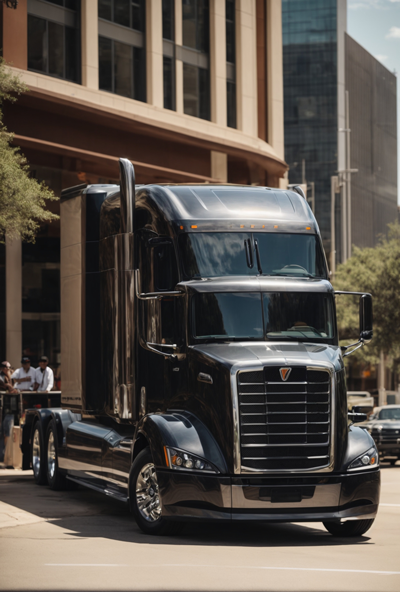
What Insurance Does a Personal Pickup Need in Texas?
Texas requires drivers to show financial responsibility. Most drivers satisfy that requirement with liability insurance. The minimum limits are $30,000 for bodily injury per person, $60,000 for bodily injury per accident, and $25,000 for property damage per accident. This is commonly written as 30/60/25.[1]
The maximum available under the minimum policy for one person’s covered bodily injuries.
The total bodily injury limit available when more than one person is injured in one covered accident.
The minimum limit for covered damage you cause to other people’s vehicles or property.
A serious crash can create damages above Texas minimum limits. If covered damages exceed your liability limit, you could be responsible for the remaining amount.
Texas pickup owners should understand that minimum liability limits may not provide enough protection after a serious accident. Drivers evaluating their options should consider how different Texas car insurance coverages protect against financial risks beyond the state minimum.
Texas Pickup Truck Insurance Coverage Options
A pickup does not automatically need a special personal insurance policy simply because it is a truck. Instead, your coverage should reflect the pickup’s value, ownership, drivers, use, and the financial risk you are comfortable retaining.
| Coverage | Texas status | What it can help pay for |
|---|---|---|
| Liability | Required | Covered injuries and property damage you cause to other people, up to the policy limits. |
| Collision | Optional by state law | Covered damage to your pickup after a collision, subject to the deductible and policy terms. |
| Comprehensive | Optional by state law | Covered non-collision losses such as theft, hail, fire, vandalism, flooding, and certain animal impacts. |
| PIP | Included unless rejected in writing | Eligible medical expenses, lost income, and certain other covered costs after an accident. |
| UM/UIM | Must be offered; written rejection required | Covered losses involving drivers with no insurance, insufficient insurance, or certain hit-and-run accidents. |
| Rental / towing | Optional | Eligible rental transportation, towing, or roadside costs according to the policy. |
Liability coverage
Liability coverage protects you against the financial consequences of covered injuries or property damage you cause to others. It does not repair your own pickup after an at-fault crash.
Drivers with more assets or greater financial exposure may decide that Texas minimum limits are not enough. There is no single liability limit that is appropriate for every household. Consider the potential cost of a serious accident and the amount of risk you can afford to keep yourself.
Collision coverage
Collision coverage can help repair or replace your pickup after a covered collision. It typically applies when the truck hits another vehicle or object, subject to the deductible and policy terms.
Modern pickups can contain expensive cameras, sensors, lighting systems, body panels, wheels, and other equipment. Because of that, repair costs can become significant even when the truck remains drivable.
Comprehensive coverage
Comprehensive coverage addresses many losses that are not collisions. Depending on the policy, examples can include theft, hail, fire, vandalism, flooding, falling objects, and animal strikes.
Comprehensive coverage can respond to many weather-related losses. However, coverage depends on the actual policy terms, exclusions, deductible, and cause of damage.
Personal Injury Protection in Texas
Texas auto policies include Personal Injury Protection unless the policyholder rejects it in writing. PIP can pay eligible medical expenses, lost income, and certain other covered costs after an accident.[2]
Uninsured and underinsured motorist coverage
Texas insurers must offer uninsured and underinsured motorist coverage. A policyholder who does not want the coverage must reject it in writing.[3]
The Texas Department of Insurance reported that more than 2.4 million state-registered vehicles were not matched to an insurance policy, representing about 12% of registered vehicles at the time of its report.[3] That makes UM/UIM worth evaluating rather than declining automatically.
Do Financed Pickup Trucks Need Full Coverage?
Texas law does not define a package called “full coverage.” In everyday use, the term usually describes a policy that combines liability insurance with collision and comprehensive coverage.
If you still owe money on your pickup, the lender will generally require physical-damage coverage to protect its financial interest in the vehicle.[4]
Your finance or lease agreement may also specify deductible limits or other insurance requirements. Before reducing physical-damage coverage, review how lender requirements can influence your full coverage decisions while you still owe money on the pickup.
Personal Pickup Insurance vs. Commercial Truck Insurance
The type of vehicle does not determine the correct policy by itself. How you use your pickup matters.
A personal auto policy may fit
- Commuting to your regular workplace.
- Family and household transportation.
- Personal errands and recreation.
- Moving your own belongings.
- Towing for personal activities when permitted by the policy.
Additional or commercial coverage may be needed
- Making paid deliveries.
- Transporting equipment or materials for customers.
- Regular contractor or service work.
- Employees regularly operating the pickup.
- A business owning or registering the vehicle.
The Texas Department of Insurance warns consumers to check their coverage when vehicles are used for delivery or other business activities. Some personal policies may not cover certain commercial uses.[5]
A pickup used for a construction company, landscaping business, delivery operation, or other regular commercial activity therefore deserves a separate coverage review. Tell the insurer how the truck is actually used. The company can then determine whether the personal policy is appropriate, an endorsement is needed, or commercial auto insurance is a better fit.
Use the same drivers, pickup, liability limits, deductibles, annual mileage, and optional coverages. Otherwise, a cheaper quote may simply provide less protection.
What Affects Texas Pickup Truck Insurance Rates?
There is no reliable statewide price that applies to every F-150, Silverado, Tacoma, Ram, Sierra, Ranger, or other pickup. Insurers price the driver and policy as well as the truck.
Driving record
Accidents, violations, and claims history can affect underwriting and premium.
Pickup model and trim
Vehicle value, repair costs, parts, technology, and other characteristics can affect physical-damage pricing.
Where the truck is kept
Insurers consider where a vehicle is garaged because claim frequency and other risk factors vary by location.
How the truck is used
Annual mileage, commuting, personal use, and business use can affect the risk presented to an insurer.
Drivers on the policy
Driving experience and the records of household drivers can affect the price.
Liability limits
More liability protection will generally cost more than choosing lower liability limits.
Deductibles
A higher collision or comprehensive deductible can reduce the premium, but it increases what you pay after a covered loss.
Credit information
Some Texas insurers use insurance credit information together with other underwriting and rating factors.
Some Texas auto insurers use insurance credit information along with other underwriting factors. A company cannot refuse to sell, cancel, or decline to renew a personal policy solely because of credit information.[6]
Does the Pickup Model Change the Cost to Insure?
Yes, but the badge on the grille is only one part of the calculation. Two Texas drivers can receive very different quotes for the same pickup.
Insurers can consider factors related to the vehicle, such as its value, repair costs, trim level, equipment, and other rating information. A high-value heavy-duty pickup can therefore price differently from a midsize model.
For that reason, a permanent list of the “cheapest trucks to insure in Texas” is not very useful. A quote based on your own ZIP code, drivers, coverage, deductible, mileage, and exact vehicle provides a much more meaningful comparison.
Examples include the Ford Ranger, Chevrolet Colorado, GMC Canyon, Honda Ridgeline, Nissan Frontier, and Toyota Tacoma.
Examples include the Ford F-150, Chevrolet Silverado 1500, GMC Sierra 1500, Ram 1500, and Toyota Tundra.
Examples include the Ford Super Duty, Chevrolet Silverado HD, GMC Sierra HD, and Ram Heavy Duty.
How to Lower Texas Pickup Truck Insurance Costs
The strongest savings strategy is not to chase an advertised percentage. Instead, decide what coverage you want and then compare that same setup across several insurers.
Drivers trying to reduce premiums should focus on keeping coverage choices consistent while exploring ways to find more affordable Texas car insurance from different insurers.
Choose coverage before comparing prices
Decide on liability limits, collision, comprehensive, deductibles, UM/UIM, PIP, and other options first.
Keep every quote comparable
Use the same drivers, pickup, liability limits, deductibles, annual mileage, and optional coverages with each insurer.
Ask about available discounts
Discounts vary by company. Depending on the insurer, savings may be available for multiple vehicles, multiple policies, safe driving, certain payment choices, or other qualifications.
Choose a deductible you can afford
A higher deductible may reduce the premium. However, you will pay more yourself after a covered collision or comprehensive claim.
Describe the pickup’s use accurately
Answer questions about commuting, mileage, towing, business use, equipment, and regular drivers accurately.
Compare again when circumstances change
A move, new pickup, different driver, mileage change, or significant renewal increase can be a good reason to shop again.
Changes in your vehicle, household or location can affect the policy you need. Reviewing Texas car insurance factors that influence coverage and pricing can help you decide whether your current policy still fits your situation.
A significant renewal increase or change in circumstances may also be a good time to compare new Texas insurance options while keeping your desired coverage levels consistent.
Texas Pickup Insurance Quote Checklist
Have the following information ready so your quotes are based on consistent details.
- Pickup year, make, model, trim, and VIN.
- Garaging address and estimated annual mileage.
- Names and driving information for household drivers.
- How the pickup is used: personal, commuting, or business.
- Your current declarations page if you already have insurance.
- The liability limits you want to compare.
- Collision and comprehensive deductibles.
- Loan or lease requirements for a financed pickup.
- Trailers, custom equipment, accessories, or modifications that may need to be disclosed.
- Confirmation that the insurance company is licensed to sell coverage in Texas.
When changing insurers, do not create a gap in coverage. The Texas Department of Insurance advises consumers not to cancel an existing policy until the new policy is active or they have written proof of the new coverage.[7]
Questions to Ask Before Insuring a Pickup
Confirm personal, commuting, towing, delivery, or business use rather than assuming.
Ask how aftermarket wheels, toolboxes, lift kits, racks, electronics, and other additions are treated.
Review the collision and comprehensive deductibles before choosing the policy.
Compare the policy with your finance or lease agreement before reducing physical-damage coverage.
Coverage for a trailer and its contents can differ from coverage for the pickup itself.
Review household drivers, permissive use, exclusions, and any driver restrictions contained in the policy.
Texas Pickup Truck Insurance FAQ
What is the minimum insurance required for a personal pickup in Texas?
Texas generally requires at least 30/60/25 liability coverage. That means $30,000 of bodily injury liability per person, $60,000 per accident, and $25,000 of property damage liability per accident.
Does a pickup truck need different insurance than a car in Texas?
Not necessarily. A personally used pickup can usually be covered under personal auto insurance. The vehicle, drivers, use, coverage choices, and insurer rules determine the policy and price.
Do I need commercial insurance if I use my pickup for work?
Possibly. Commuting to your normal workplace is different from regularly making deliveries, hauling materials for customers, transporting equipment for paid jobs, or allowing employees to operate the vehicle. Tell the insurer exactly how the pickup is used.
Does Texas require Personal Injury Protection?
Texas auto policies include PIP unless the policyholder rejects it in writing. Review the amount offered and what it covers before deciding whether to keep or reject it.
Is uninsured motorist coverage required in Texas?
Insurers must offer UM/UIM coverage. If you do not want it, you must reject it in writing. It can provide protection when an at-fault driver has no insurance or not enough insurance.
Do I need collision and comprehensive on a financed pickup?
A lender will generally require physical-damage coverage while money is owed on the pickup. Review the finance agreement because it may also establish deductible or other insurance requirements.
Are heavy-duty pickups automatically commercial vehicles?
No. A heavy-duty pickup is not automatically insured commercially simply because of its size. Ownership and use matter. Regular business activities, commercial ownership, or other work-related use can change the coverage you need.
Does credit affect pickup truck insurance rates in Texas?
Some Texas auto insurers use insurance credit information along with other factors. Texas law places limits on how that information can be used.
Will a lift kit or other modification affect coverage?
It can. Aftermarket equipment may need to be disclosed or separately covered. Tell the insurer about significant modifications and ask how the policy would value them after a covered loss.
What is the best way to compare Texas pickup insurance quotes?
Compare several insurers using the same pickup, drivers, liability limits, deductibles, mileage, and optional coverage. A lower quote is not an equal comparison if it also provides less protection.
Match the Insurance Policy to Your Pickup and Its Use
For a personal pickup in Texas, start with the state’s liability requirement and then decide how much additional protection makes sense. Collision and comprehensive deserve particular attention when repairing or replacing the truck would be difficult to pay for yourself.
Next, make sure the insurer understands how you actually use the pickup. A truck used mainly for family transportation presents a different insurance question from one that hauls equipment to paid jobs every day.
Finally, compare equivalent quotes. Keep the liability limits, deductibles, drivers, mileage, and optional coverages consistent. That produces a useful comparison instead of simply identifying the smallest premium on the screen.
Review Your Texas Pickup Coverage Before Choosing a Policy
Prices can vary between insurers even when the truck and driver remain the same. Compare equivalent coverage and make sure the policy reflects how you actually use your pickup.
Explore Texas full coverage optionsReferences
- Texas Department of Insurance — Auto Insurance Guide ↩
- Texas Department of Insurance — Personal Automobile Coverage Requirements ↩
- Texas Department of Insurance — Uninsured Motorist Coverage in Texas ↩
- Texas Department of Insurance — Shopping Smart for Auto Insurance ↩
- Texas Department of Insurance — Business and Delivery Use of Personal Vehicles ↩
- Texas Department of Insurance — Credit Scoring and Insurance ↩
- Texas Department of Insurance — Auto Insurance Shopping Guide ↩